
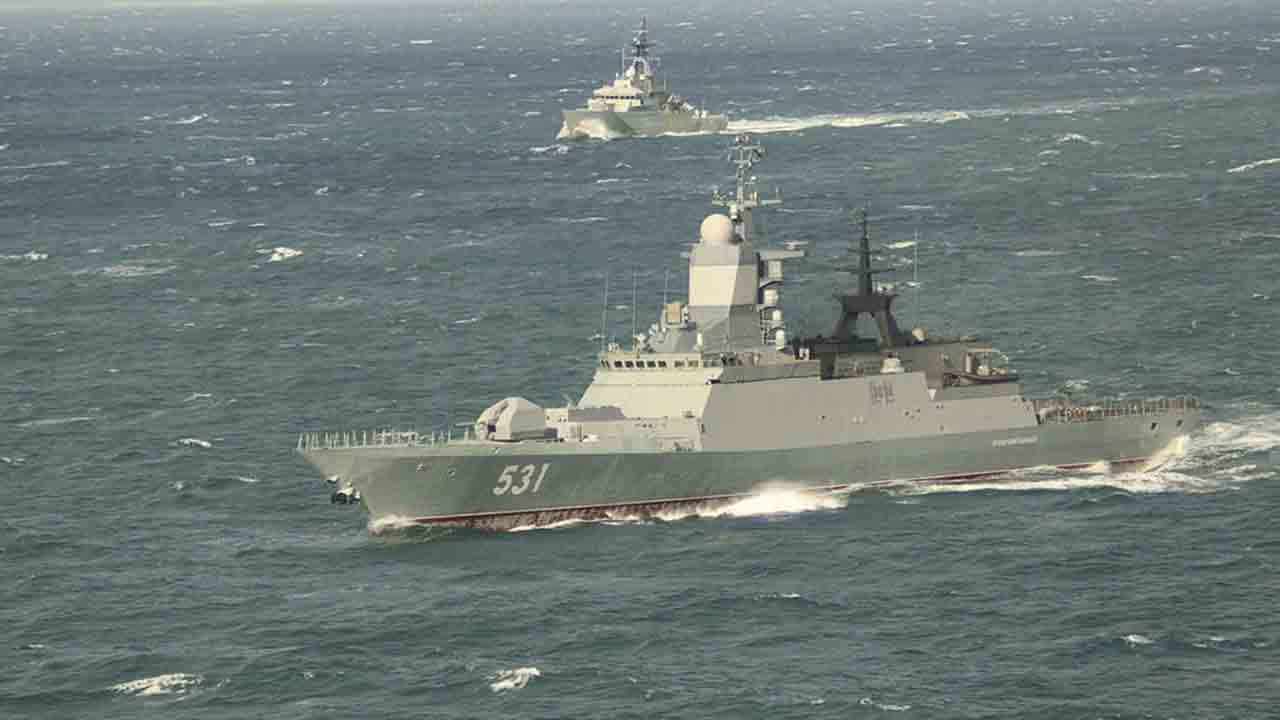
A British Royal Navy warship and helicopter have completed a focused 48-hour operation to monitor the activity of Russian vessels in UK waters, as part of a coordinated effort with NATO allies.
The operation was carried out by the patrol vessel HMS Mersey, based in Portsmouth, with support from a Wildcat helicopter from the 815 Naval Air Squadron. Teams were deployed to track the movements of the Russian Steregushchiy-class frigate RFN Soobrazitelny and the sanctioned tanker MV Anatoly Kolodkin.
According to the Royal Navy, HMS Mersey and the Wildcat helicopter maintained close surveillance as the two Russian vessels sailed west through the English Channel, using radar and sensors to gather intelligence.
At the western end of the channel, the two vessels separated. The British Navy then continued to track the Soobrazitelny on its return east through the English Channel, while the Anatoly Kolodkin headed toward the Atlantic.
The commanding officer of HMS Mersey, Lieutenant Commander Dan Wardle, said the mission demonstrates the vessel’s operational readiness in monitoring Russian naval movements in UK waters.
According to him, coordination with allied forces enhances situational awareness and response capability, helping to protect the integrity of the UK’s maritime environment.
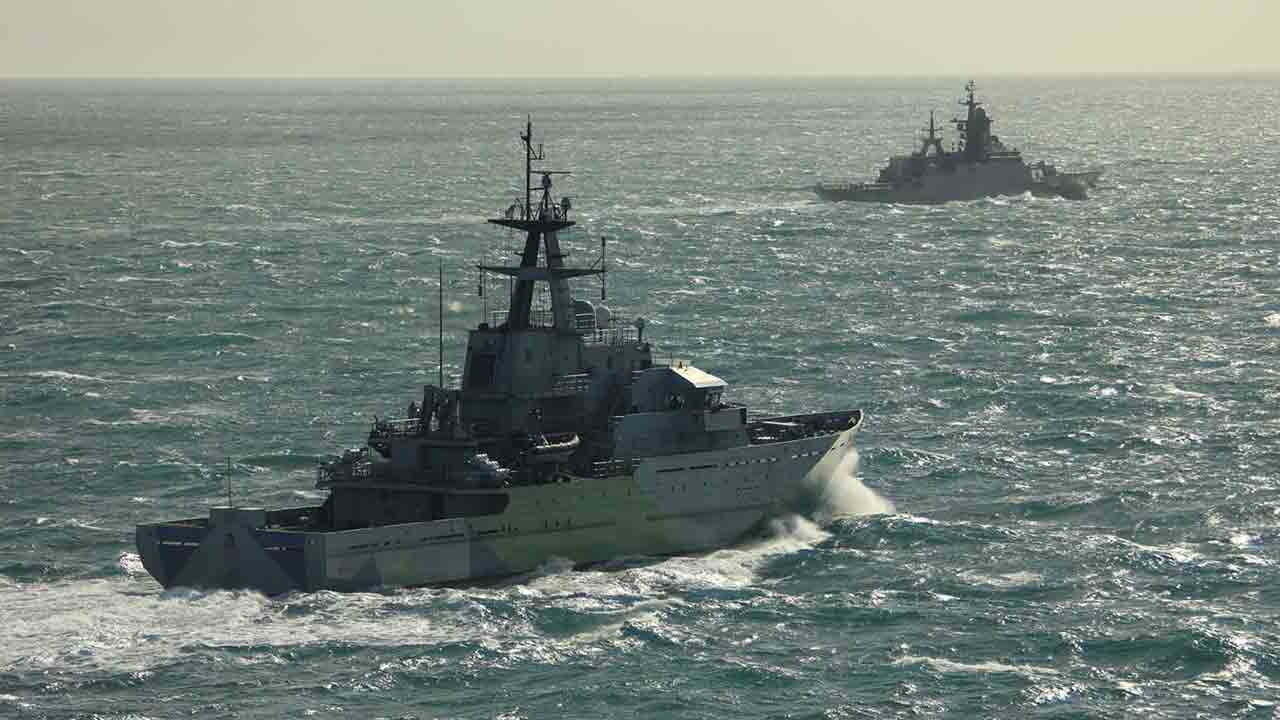
The commander of the British fleet, Vice Admiral Steve Moorhouse, stated that in an increasingly contested and uncertain global environment, the actions of HMS Mersey and the 815 Naval Air Squadron reinforce the Royal Navy’s enduring commitment to protecting the nation’s territorial waters.
This was the latest in a series of surveillance missions involving Russian vessels. Two weeks earlier, the Royal Navy had already tracked two sanctioned Russian cargo ships and their escort vessels in UK waters, as part of a focused NATO operation from the Mediterranean to the North Sea.
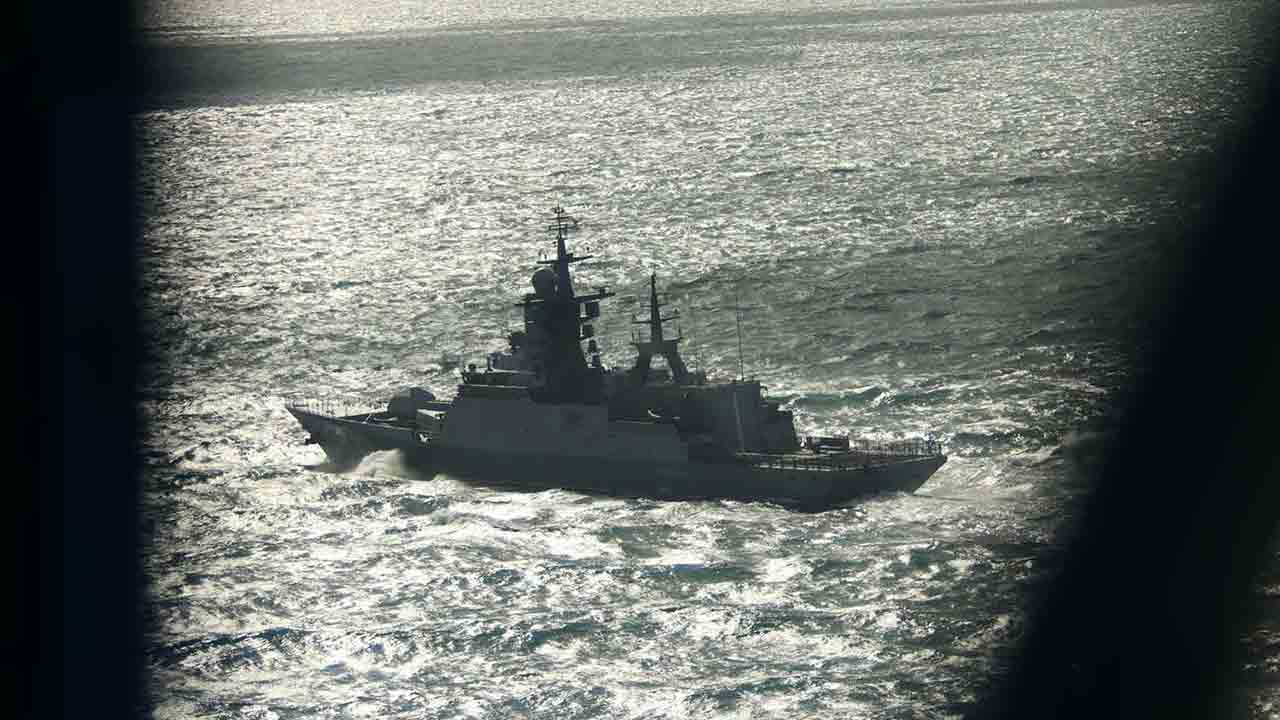
In the first of these actions, the Russian Ropucha-class landing ship Aleksandr Otrakovsky and the cargo vessel Sparta IV were tracked after being initially intercepted by HMS Cutlass of the Royal Navy’s Gibraltar Squadron in the Strait of Gibraltar. Afterward, HMS Tyne and a Wildcat helicopter continued to monitor their transit through the English Channel and the North Sea.
Just 48 hours later, HMS Tyne and another Wildcat helicopter were once again deployed to monitor another Ropucha-class Russian warship, Aleksandr Shabalin, and the cargo vessel MV Sabetta, as they sailed west through the English Channel.
+ Lexus reveals pricing for the 2026 ES in the U.S. and signals a new electrified phase for the sedan
Source and images: Royal Navy. This content was created with the help of AI and reviewed by the editorial team
